


| Home |
| About Osteopathy |
| First Appointment |
| Cranial |
| Our Team |
| Links |
| Contact |
| Cranial Osteopathy |
|
Dr Sutherland discovered that the 26 bones making up the skull were intricately joined in such a way as to permit very slight motion. He understood that this was in order to permit a rhythmical and very slight expansion / contraction of the fluid within the skull. Later Dr Sutherland found that it was possible to detect variation in frequency, amount and quality of the cyclical motion between different patients dependent on general health, emotional state and history of injury especially involving the head. This discovery of cranial motion led on to the understanding that this 'involuntary motion' of the skull and its contents is present in all tissues of the body, and is a basic property of living tissues. When body tissues are subjected to trauma such as accidents, this involuntary motion is disrupted. If the trauma is mild, then the body can dissipate the effects and no permanent damage is caused. However, if severe enough, the tissues may not return to their previous state, and a permanent record of trauma remains. This is palpable to trained hands. |
|
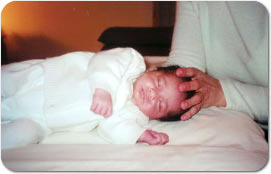
| An osteopath has a highly developed sense of palpation and is trained to detect and assess the dynamic state of the body tissues, both within the cranium and the rest of the body. The osteopath will first take the a detailed case history from the patient, then using this detailed knowledge of anatomy and physiology will assess the patter and quality of motion and try to put together the "story" of what traumas have not been well accommodated by the body, and why present symptoms have developed. The osteopath will support the body in its attempt to return to health, by using gentle techniques to release strain patterns. This type of treatment is suitable for everyone from newborn babies to the elderly. |
 |
|
|
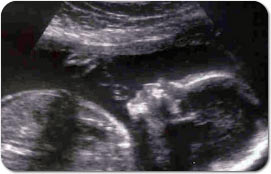
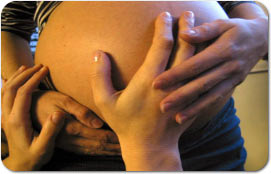
Cranial Osteopathy in Pregnancy The body of a pregnant woman goes through several changes during pregnancy. As the pregnancy progresses, the weight gain, the widening of the pelvic bones and the increased lumbar curvature all contribute the so called pregnancy discomforts. Relaxin is a hormone that regulates collagen It softens the pelvic joint and ligaments in preparation for delivery. Unfortunately, these changes make the body more vulnerable to strain and can result in pain. Osteopathic treatment during pregnancy can help the body adapt, and make the pregnancy much more comfortable. |
 |
Cranial Osteopathy for Children During labour babies go through an enormous amount of compressive forces to pass through the narrow passageway of the birth canal. The baby's head and body has to turn and twist while passing through the birth canal. The baby's head is squeezed by the pelvic bones resulting in overlapping of the baby's bones plates. This can sometimes be visible after labour as the babies present odd shaped heads soon after delivery. In the first few days the odd shape head is gradually decreased. This is helped by the baby' own instinct of suckling of mother's breast or his or hers fingers, crying and yawning. |
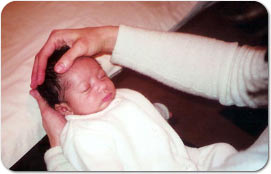 |
All these actions help the head's bone plates to go back to a normal position. However, this unmoulding process is often incomplete, especially if the birth has been difficult. As a result, the baby may have to live with some very uncomfortable stresses within its head and body. Cranial osteopathic treatment is a very gentle and safe approach that can help the baby to overcome the retained compressive forces after birth. Gentle pressure is applied to the baby's head and body enabling the inherent ability of the body to release stresses and balance itself. |


Notting Hill Osteocare, Lucerne Clinic, 5a Lucerne Mews, London W8 4ED. Tel: 0207 7924499